Tesla Delays Humanoid Robot Deliveries To 2027
The automator cites unresolved hardware and software hurdles that continue to plague the broader robotics sector.
By Emily Carter ·
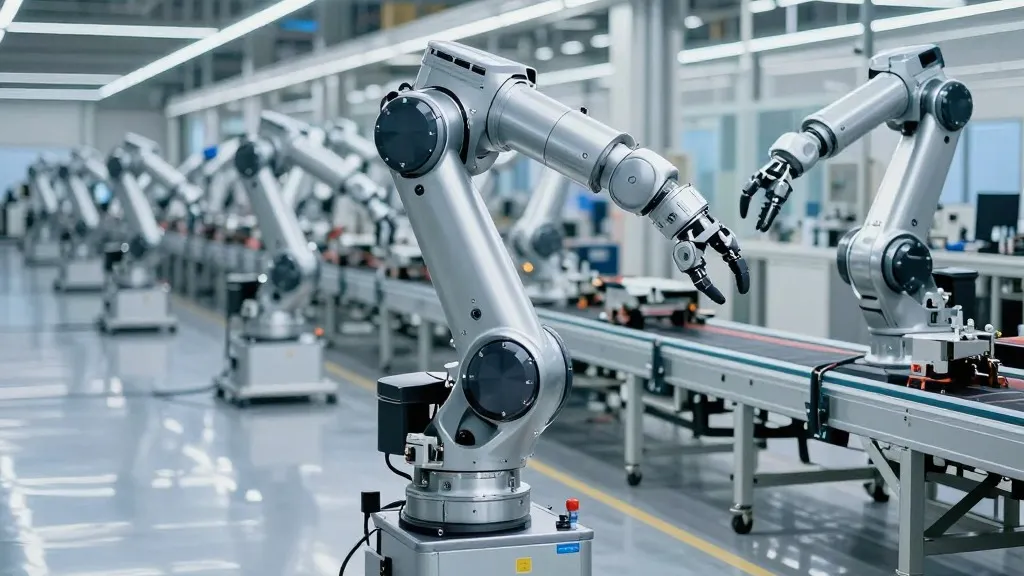
Tesla has officially pushed the timeline for delivering its Optimus humanoid robots to external clients to the end of 2027. During the company's Q3 2026 earnings call, CEO Elon Musk acknowledged that critical components, specifically the robot's hands, durability, and artificial intelligence, remain unfinished. This update marks another shift in a timeline that has repeatedly slipped since the project's inception.
The delay stems from significant engineering challenges that are common across the humanoid robotics industry. While early production has begun on the high-volume line in Fremont, California, the infrastructure is currently designed to handle one million units annually. However, Musk noted that reaching a rate of 20,000 units per week will take at least a year due to ongoing design changes. The most persistent hardware issue is the hand, which must be soft enough for delicate tasks yet durable enough for constant industrial wear, a balance that is difficult to achieve without the self-healing capabilities of human skin.
Software presents an equally formidable barrier. Tesla lacks the vast fleet of robots needed to collect real-world data for its AI models, a resource its automotive division uses for Full Self-Driving development. To address this, the company plans to build 10,000 to 20,000 units for an internal training program, known as the Optimus Academy, and integrate its AI5 chip by April 2027. Musk promised a demonstration video within two months showing unscripted task completion, aiming to distinguish the robot from competitors who rely on pre-programmed routines.
Contextually, this delay follows a pattern of shifting goals. In 2024, Tesla targeted internal use for 2025 and high-volume external sales for 2026. By January 2025, the goal was 10,000 units, though none were ultimately performing useful work. The Q3 shareholder letter now describes current output as the first "production-quality" bots, implying that all previous iterations were prototypes. This admission highlights the gap between prototype development and industrial readiness.
Competitors are also grappling with similar limitations, though with differing strategies. XPeng recently activated an automated production line for its IRON robot, targeting mass production by the end of 2026 and deliveries in early 2027. Meanwhile, Boston Dynamics has begun deploying its electric Atlas in car factories, securing committed customers including Google DeepMind. Boston Dynamics has opted for sturdy grippers over human-like dexterity, bypassing the specific hand issue that is currently stalling Tesla.
The outlook for the sector remains cautious. While Tesla claims no competitor is close to matching its progress, rivals like XPeng and Boston Dynamics are already advancing with similar or faster timelines. The industry is still searching for a solution to generalization, where robots can adapt to new tasks without retraining. For now, the focus remains on whether Tesla's upcoming demo will prove that the robot can perform useful, unscripted work or if the late-2027 target will be the next chapter in a series of delays.
Source: Electrek